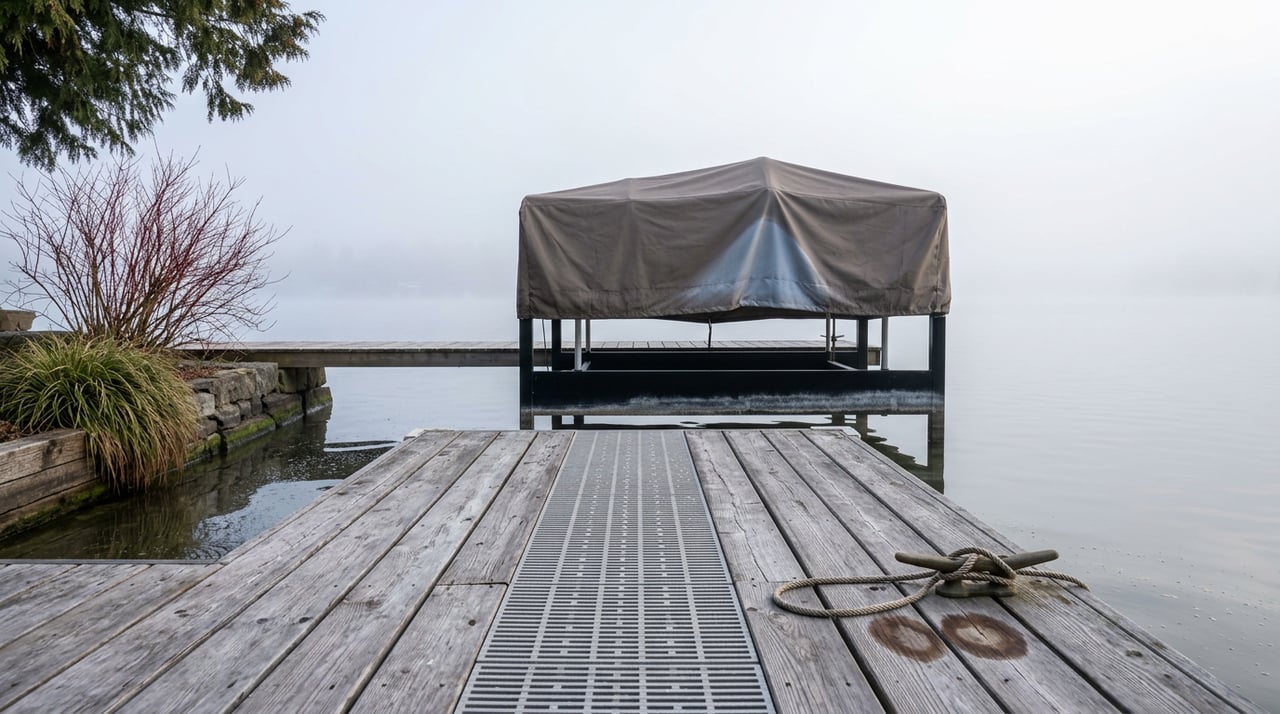
A seller on Medina's west shore had done everything right. The kitchen had been refreshed two years earlier. The landscaping crew had just finished a pass through the beds along the water. The listing photos were booked. Then a buyer's inspector flagged the dock: aging pilings, a section of solid decking that no longer met current standards, and a repair that would require sign-off from an agency the seller had never dealt with before. The house was ready. The dock was not, and the dock turned out to run on its own calendar.
That is the pattern worth understanding before listing a waterfront home in Medina. The house sells on staging and square footage. The dock sells, or stalls, on permitting timelines that have nothing to do with your closing date.
Frontage Feet, Not Square Footage
Waterfront listings along Medina's Lake Washington shoreline, the stretch locally known as the Gold Coast, are marketed on feet of frontage and dock capacity as much as on bedrooms and baths. Buyers shopping this stretch compare low-bank versus no-bank shoreline, dock length, boat lift configuration, and moorage depth the same way they compare kitchens elsewhere. That means the dock is not a minor exterior feature waiting on a punch list. It is part of the product a buyer is evaluating, and it draws inspection scrutiny accordingly.
Which is exactly why a dock issue surfacing mid-transaction carries more weight here than it would on an inland listing. A buyer who is paying a premium for shoreline expects that shoreline to function, and a repair that cannot be scheduled before closing becomes a negotiation, not a footnote.
Three Regulators, One Calendar Nobody Mentions Upfront
Any work on a Medina dock that touches the lakebed or changes the structure typically runs through more than one agency, and each one works on its own clock.
| Layer | What it covers | Typical timing |
|---|---|---|
| City of Medina shoreline review | Whether the scope counts as routine maintenance or triggers a shoreline permit | Set by city staff after scope and application review |
| WDFW Hydraulic Project Approval | Any work that uses, diverts, obstructs, or changes the lakebed or flow | Up to 45 days after a complete application, per the Washington Department of Fish and Wildlife |
| Army Corps of Engineers and DNR | Triggered by dredge, fill, new piles, or docks over state-owned aquatic land | Reviewed case by case, often in parallel with the state process |
The Washington Department of Fish and Wildlife is explicit that the Hydraulic Project Approval process protects fish life and habitat in state waters, and that processing can run up to 45 days once an application is complete. That 45-day figure is the floor, not the ceiling, and it only starts once the paperwork is in order. A seller who assumes a dock repair is a quick fix is often working from a timeline that has no relationship to how these agencies actually operate.
Ten Weeks a Year
Here is the detail that changes how a Medina waterfront listing should be timed. In-water construction on Lake Washington, the watershed regulators refer to as WRIA 8, is typically restricted to a defined window each year to protect juvenile salmon migration. That window is commonly cited as mid-July through the end of September, with the exact dates confirmed site by site in each Hydraulic Project Approval.
Read that again in the context of today's calendar. It is early August. If a dock issue surfaces during a fall listing and repair work has not already started, there is a real chance the window closes before a fix can be completed, pushing the work into next summer. A seller who lists in October with an unresolved dock problem is not looking at a few weeks of delay. They may be looking at carrying a known issue through an entire off season, disclosed to every buyer who tours the property in the meantime.
The $28,000 Line Most Sellers Don't Know Exists
Washington law draws a specific dollar line around what counts as a minor dock repair versus a project that requires full shoreline permitting. Effective August 2023, the threshold for exempt residential dock replacement sits at $28,000 in fair market value, and only applies when the new dock matches the footprint of the one it replaces and the local shoreline program has been updated to current state guidelines.
On a modest inland dock, that threshold might cover most repairs. On a Gold Coast dock built to handle a substantial boat lift and multiple watercraft, replacement costs at current material and labor rates can clear that line quickly. Once they do, the project is no longer routine maintenance in the eyes of the state. It becomes a shoreline substantial development case, with the fuller review timeline that comes with it. A seller estimating repair costs based on what a contractor quotes for materials alone, without checking that number against the exemption threshold, can misjudge which regulatory path they are actually on.
Why "Like for Like" Isn't as Simple as It Sounds
Washington's shoreline framework generally favors limiting the number of private docks along a given stretch of water, and joint or shared moorage arrangements are often the preferred outcome when a new or expanded dock is proposed. That preference matters for a seller who needs more than a straight repair. If the project moves from replacing what exists to expanding it, whether for a longer dock, a second lift, or added moorage, the seller may need to show why shared moorage with a neighboring property is not feasible before the expanded version gets approved. That is a conversation, and sometimes a negotiation with an adjacent owner, that takes time most listing timelines don't budget for.
What This Means If You're Listing This Fall
Medina's waterfront market is thin enough that a single delayed or reopened negotiation can swing the outcome. As of June 2026, the broader Medina market showed a median list price near $5 million, with price per square foot down roughly 15 percent from the same month the year before, according to Movoto's market data for the area. Small sample sizes cut both ways here. A handful of comparable closings sets the tone for the next negotiation, and a stalled dock repair that pushes a closing past the fish window doesn't just cost time. It changes what the next buyer is willing to offer once the issue is disclosed.
That is the core of it. In most neighborhoods, a seller can address a physical repair on their own schedule. In Medina, the shoreline itself sets deadlines that don't move for a closing date, and missing the mid-July to late-September window can mean the difference between a repair that's finished before a buyer ever tours the property and one that follows the listing into every showing for the next nine months.
The Pre-Listing Move That Buys You Time
The sellers who avoid this problem are the ones who have their dock assessed before the home goes on the market, not after an inspector raises it. Starting a Hydraulic Project Approval application early, confirming whether a repair falls under or over the $28,000 exemption threshold, and checking the current WRIA 8 window dates with the city before listing turns a potential mid-escrow surprise into a resolved line item on the disclosure form. It is the difference between a buyer seeing a completed repair and a buyer discovering an open regulatory question on a property they are about to pay a premium for.
FAQ
Does every dock repair in Medina require a WDFW permit? Any work that disturbs the lakebed or changes water flow generally requires a Hydraulic Project Approval from the Washington Department of Fish and Wildlife, though the scope and cost of the project determine whether it also triggers a full city shoreline permit.
Can a dock issue actually delay closing? It can, particularly if the repair falls outside the typical July to September in-water work window. A seller who discovers a dock problem in October may not be able to complete the fix until the following summer.
What if my dock predates current shoreline rules? Existing docks are generally evaluated by the city and state whenever new work is proposed on them, so a seller planning any exterior changes should confirm current requirements before assuming past construction sets the standard for a repair or replacement today.
Selling waterfront in Medina rewards sellers who treat the dock as part of the transaction timeline from day one, not as a repair item to handle after an inspection report. If you're weighing a listing on the Gold Coast this fall, Roy Towse can walk through what the current shoreline calendar means for your specific dock and your specific closing window. Book a call today.