Clyde Hill, WA Neighborhood Guide: Luxury Living on the Eastside
Category | Figure |
|---|---|
ZIP Code | 98004 |
County | King County, WA |
Population | Approximately 3,119 |
Median Home Sale Price | Roughly $4.85M to $7M in 2026, depending on the reporting period and mix of sales |
School District | Bellevue School District |
Population and income figures are census-based; home price ranges are compiled from Homes.com and Movoto market data reported across early to mid-2026.
Ready to see what's currently available? Search Clyde Hill area listings or contact Roy Towse for off-market opportunities and a tailored search.
A closer look at views, privacy, and lot design in one of the Eastside's smallest, most exclusive cities.
If you are looking for a luxury neighborhood that feels tucked away but still connected to the Eastside, Clyde Hill deserves a close look. This small city offers a rare mix of privacy, views, large homesites, and quick access to Bellevue and regional routes. For buyers, sellers, and relocating households, understanding how Clyde Hill lives day to day can help you make a smarter move. Let's dive in.
Why Clyde Hill Stands Out
Clyde Hill is a very small city of about 3,119 residents in roughly 1.1 square miles. Census-based data shows a median household income above $239,000 and a median owner-occupied home value above $2 million, which helps explain why the area is closely associated with luxury housing.
What makes Clyde Hill different is not just price point. The city's adopted planning vision describes it as a low-density residential community that values tranquility, views, and a preserved suburban character. In simple terms, this is a place designed to stay primarily residential rather than evolve into a busy mixed-use center.
What to Love About Clyde Hill
- Large view lots: R-1 zoning sets a 20,000-square-foot minimum lot area, with 100-foot minimum frontage and depth, creating a spacious, low-density feel throughout the city.
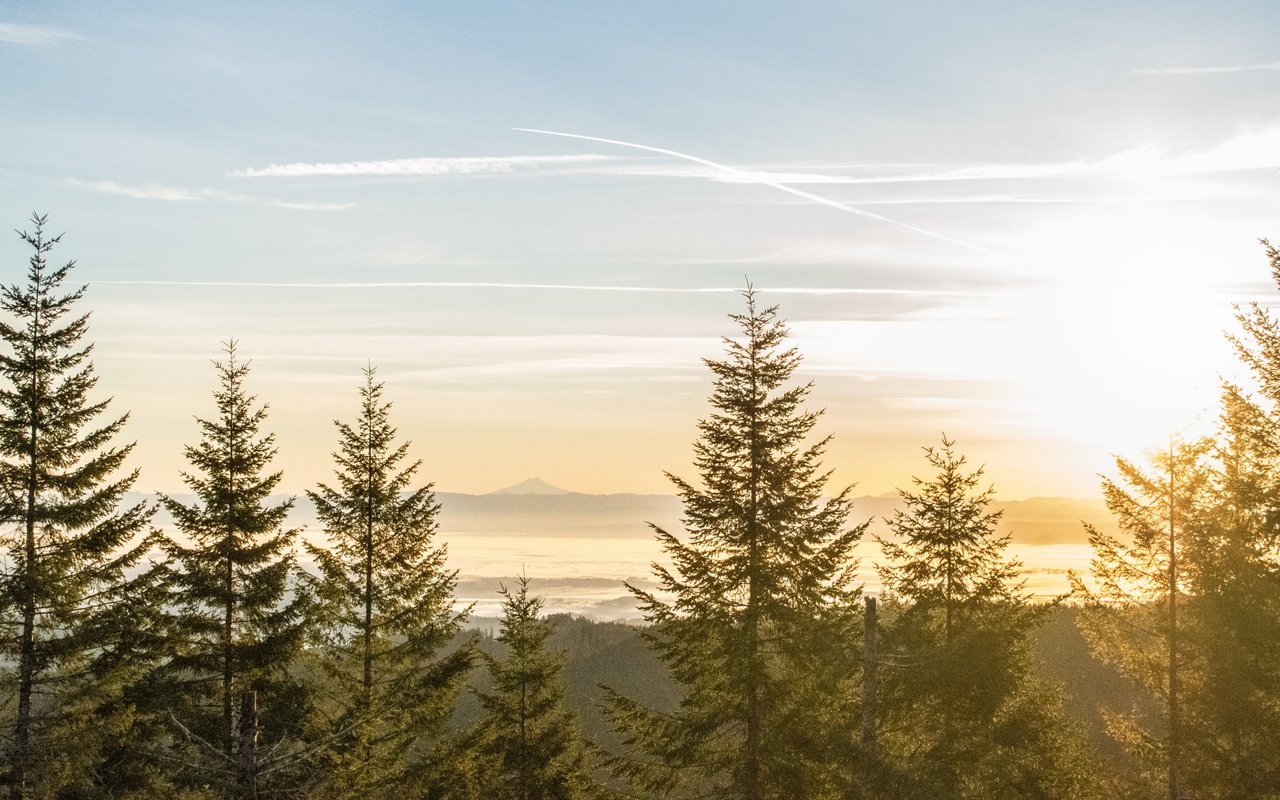
- Panoramic views: The city's own view ordinance recognizes sightlines toward Lake Washington, the Seattle skyline, and the Cascade and Olympic mountains as part of what shapes property value here.
- Genuine privacy: Generous setbacks (30-foot front, 35-foot rear), a 25-foot height limit, and mature landscaping create separation between homes without gates or walls.
- Trail connectivity: The 8-mile Points Loop Trail links Clyde Hill to Medina, Hunts Point, and Yarrow Point, with connections to the Evergreen Point and Clyde Hill/Yarrow Point transit stations.
Clyde Hill Feels Residential by Design
For many luxury buyers, that residential focus is the appeal. The city has stated that it wants to keep zoning primarily single-family residential and limit new commercial land use. That creates a setting where the experience is centered on homes, landscaping, streetscapes, and outlooks rather than storefronts and dense redevelopment.
If you want a neighborhood where the home itself takes center stage, Clyde Hill fits that profile well. It tends to appeal to people who value calm surroundings, visual openness, and a more curated neighborhood feel close to Bellevue.
Large Lots Shape the Luxury Experience
A major part of Clyde Hill's character comes from its land use rules. The city's R-1 zoning includes a minimum lot area of 20,000 square feet, plus minimum frontage and depth requirements of 100 feet. There is also a 25-foot height limit, a 30-foot front setback, a 35-foot rear setback, and a 30 percent structural coverage cap.
Those standards matter because they shape how homes sit on the land. Instead of dense building patterns, you tend to see spacious yards, mature landscaping, and lower-profile homes with breathing room around them. For buyers, that often translates to a stronger sense of privacy and a more established luxury streetscape.
Home Styles in Clyde Hill
Clyde Hill does not read like a one-style neighborhood. Planning materials point to a largely single-family environment where large lots can support remodeled older homes, larger rebuilds, and lots that may be capable of accessory dwelling unit use.
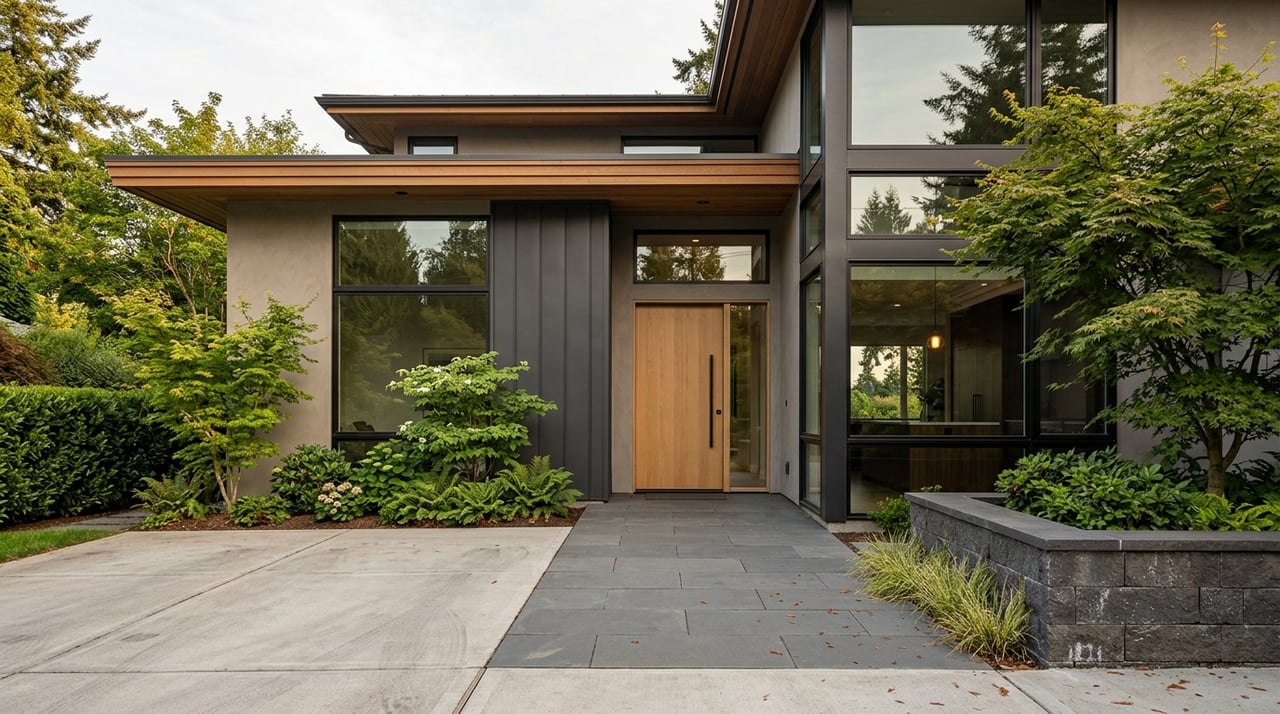
That flexibility has helped create a varied luxury housing mix. The area has been noted for mid-century modern revivals, Northwest regional homes with natural materials and wide glazing, and modern-traditional estates on large view-oriented lots. The common thread is not one exact design style, but homes that are tailored to the site, privacy, and outlook.
Views Are a Major Part of Value
In Clyde Hill, views are not just a bonus feature. They are part of the city's identity and part of how value is understood. The city's view ordinance specifically notes that views and trees contribute to property values, attractiveness, and livability.
The ordinance references views of Lake Washington, bridges, skylines, landmarks, the Cascade Mountains, the Olympic Mountains, and surrounding hills. That gives you a sense of why view orientation can be such a defining part of home design and lot appeal here.
Why Topography Matters
Clyde Hill's elevation ranges from about 75 feet to 375 feet above sea level. That change in elevation helps explain why some homes feel especially elevated and why view corridors can vary so much from one property to the next.
For buyers, this means two homes in the same city can offer very different experiences. One may feel more sheltered and tree-lined, while another may open to sweeping territorial, water, or skyline views. In a market like this, the specifics of the lot matter just as much as the house itself.
Privacy Comes From Space and Landscaping
Luxury buyers often ask what privacy really looks like in Clyde Hill. In most cases, it comes from a combination of distance, topography, mature trees, and generous setbacks. It is less about isolation and more about how the neighborhood has been physically shaped over time.
The city's code and planning materials treat trees as both view elements and privacy buffers. That means landscaping plays a central role in how properties feel, both from the street and from inside the home. Open space, significant trees, and compatibility with neighborhood character are all emphasized in the city's planning framework.
The Balance Between Trees and Views
One of Clyde Hill's more distinctive features is that it has a formal process for resolving tree, view, and sunlight conflicts. That matters in a view-sensitive luxury market where mature landscaping can enhance privacy but also affect sightlines.
If you are buying or selling in Clyde Hill, this is one area where local knowledge becomes especially important. Understanding a property's topography, landscaping, and view relationship can be key to evaluating long-term enjoyment and positioning.
Daily Life in Clyde Hill
Clyde Hill is not a place defined by a major downtown or a large in-city commercial scene. The lifestyle is more residential and low-key, with quiet streets, intentional open spaces, and quick access to nearby amenities in Bellevue and surrounding communities.
The city says it owns one neighborhood park and several pocket parks. Planning materials also note that these pocket parks provide pedestrian access to trails and viewpoints toward Lake Washington. That small-scale network supports a lifestyle that feels peaceful and outdoors-oriented without requiring a large municipal park system.
Trails and Outdoor Connection
One of the strongest lifestyle features is the Points Loop Trail, an 8-mile loop linking Clyde Hill with Medina, Hunts Point, and Yarrow Point. The city also notes that this trail system connects to the Evergreen Point and Clyde Hill/Yarrow Point transit stations.
That kind of connectivity adds range to day-to-day life. You can enjoy a quieter residential setting at home while still having pedestrian and transit connections that tie into the broader Eastside.
Lake Access Nearby
Clyde Hill itself is not defined by public waterfront amenities, but nearby Bellevue expands what is available. Meydenbauer Bay Park offers public access to Lake Washington, including a beach house, pedestrian pier, moorage, and a non-motorized watercraft launch.
For many buyers, that is an important part of the lifestyle equation. You do not necessarily need a waterfront lot to enjoy time on or near the lake, and Clyde Hill's location makes that access relatively convenient.
Dining, Entertainment and Shopping
Clyde Hill has almost no commercial development of its own, with Queen Bee Café standing out as one of the only named businesses within city limits, serving coffee and pastries to residents. For the wider dining, shopping, and entertainment scene, residents head just minutes into downtown Bellevue to The Bellevue Collection, comprising Bellevue Square, Lincoln Square, and Bellevue Place, along with The Shops at The Bravern for a more European-style luxury retail experience.
Connected to Bellevue and Beyond
One of Clyde Hill's biggest strengths is how it balances seclusion with access. The city sits between Bellevue and Seattle, and local planning materials emphasize access to regional urban centers and transportation hubs.
WSDOT materials for SR-520 show the corridor connecting Seattle with Bellevue, Kirkland, and Redmond. For buyers who want a quieter home environment without feeling cut off from work, dining, or regional destinations, that positioning is a meaningful advantage.
Schools Serving Clyde Hill
Clyde Hill falls within the Bellevue School District, one of Washington's top-rated public school systems. Students typically attend Clyde Hill Elementary, located within the community, before moving on to Chinook Middle School and Bellevue High School, both consistently ranked among the state's strongest public schools. School assignment depends on the specific address, so buyers should always confirm current attendance boundaries with the district before purchasing, particularly near the 98004/98005 border.
Clyde Hill Real Estate Market
Clyde Hill's median home sale price has ranged from roughly $4.85 million to just under $7 million across different 2026 reporting periods, reflecting the city's low sales volume, typically around 18 to 31 homes sold per year, and the wide variation between established homes and recent custom builds. Established homes generally trade in the $3 million to $5 million range, while view properties and new construction can reach $5 million to $10 million or more. Clyde Hill's median effective property tax rate is about 0.66%, below both the Washington state median of 0.92% and the national median. Search current Eastside listings or see the broader Bellevue neighborhood guide for comparison.
Median price ranges and sales volume are compiled from Homes.com and Movoto market data reported in early to mid-2026; property tax rate is sourced from Ownwell's Clyde Hill, King County effective tax rate analysis.
What Luxury Buyers Should Notice
In Clyde Hill, luxury is often expressed through setting as much as square footage. When you evaluate homes here, it helps to look beyond finishes and focus on the full property experience.
Key things to watch include:
- Lot size and usable outdoor space
- View orientation and how protected those sightlines feel
- Privacy from landscaping, setbacks, and elevation
- Architectural style and how well it fits the site
- Proximity to Bellevue, trails, and regional routes
Because the city is so small, inventory can feel limited and highly specific. A strategic search often means knowing which features are truly hard to replace and which ones can be improved over time.
What Luxury Sellers Should Understand
If you own a home in Clyde Hill, your property may compete on a different set of strengths than homes in denser Bellevue neighborhoods. Buyers here are often paying close attention to lot presence, privacy, outlook, and how the home relates to the land.
That means presentation matters at multiple levels. Interior design and finish quality are important, but so are landscaping, approach, outdoor living areas, and the way views are framed from key rooms. In a market like Clyde Hill, strong positioning usually comes from telling a clear story about the property's setting and long-term appeal.
Why Local Strategy Matters in Clyde Hill
Clyde Hill can look simple on a map, but it is nuanced in practice. Lot conditions, view relationships, zoning context, and neighborhood character all influence value. In a luxury market this specific, the details matter.
That is where experienced Eastside guidance can make a real difference. Whether you are relocating, buying a long-term home, or preparing a luxury property for sale, you benefit from a strategy grounded in how buyers actually evaluate homes in small, high-demand enclaves like Clyde Hill.
If you are considering a move in Clyde Hill or anywhere on the Eastside, Roy Towse offers the local insight, discretion, and high-touch guidance that luxury clients expect.
Frequently Asked Questions
What is Clyde Hill known for in the Eastside luxury market?
Clyde Hill is known for large single-family lots, strong privacy, mature landscaping, view-oriented homes, and a quiet residential setting close to Bellevue and regional routes.
What kinds of homes are common in Clyde Hill?
Clyde Hill includes a mix of remodeled older homes, custom rebuilds, mid-century modern revivals, Northwest regional homes, and modern-traditional estates shaped by large lots and view-focused siting.
How big are lots in Clyde Hill?
The city's R-1 zoning requires a minimum lot area of 20,000 square feet, along with minimum frontage and depth standards that support a spacious, low-density feel.
How does privacy work in Clyde Hill neighborhoods?
Privacy in Clyde Hill often comes from generous setbacks, large lots, mature trees, and topography rather than dense separation or gated development.
Is Clyde Hill close to Bellevue and Seattle?
Yes. Clyde Hill sits between Bellevue and Seattle, and the SR-520 corridor provides regional connections to Bellevue, Seattle, Kirkland, and Redmond.
What outdoor amenities are near Clyde Hill homes?
Clyde Hill has a neighborhood park, several pocket parks, and access to the Points Loop Trail, while nearby Bellevue offers public Lake Washington access at Meydenbauer Bay Park.