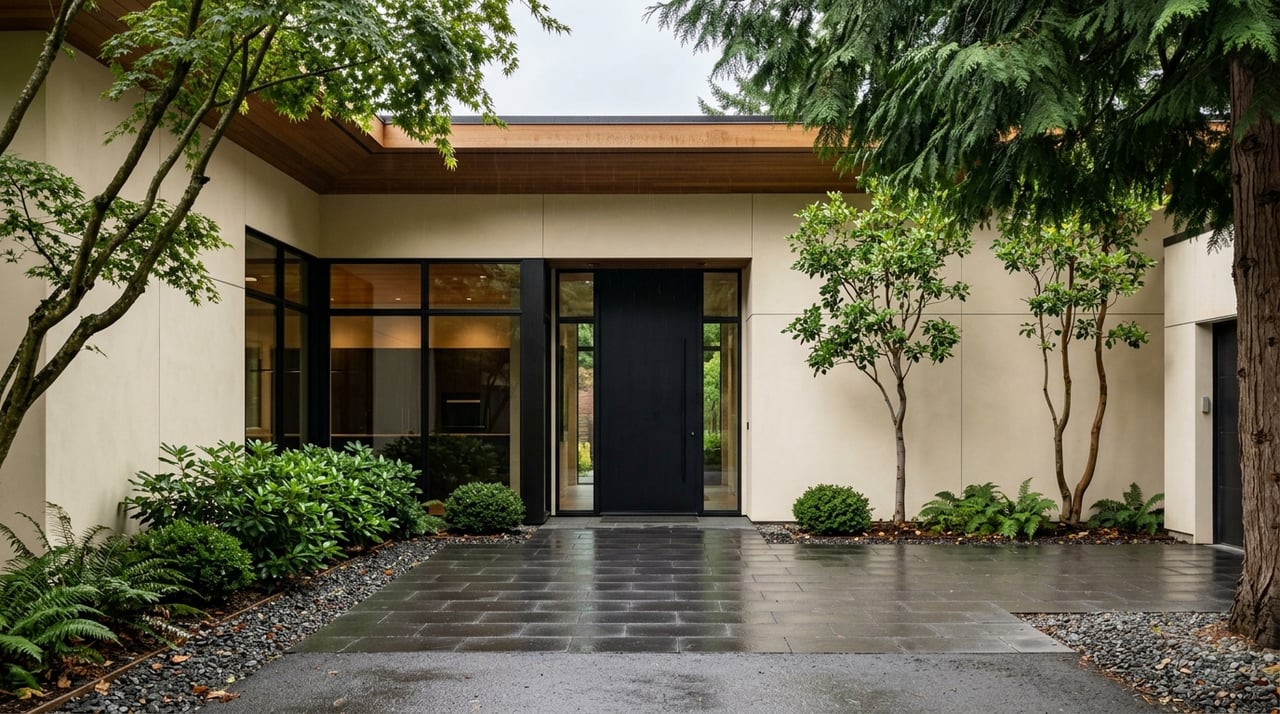
Choosing between Seattle and the Eastside is not just about picking a side of the lake. It is about matching your budget, commute, lifestyle, and long-term goals to the right submarket. If you are weighing where to put down roots next, this guide will help you compare the tradeoffs clearly and focus on what matters most for your move. Let’s dive in.
Start With Price and Inventory
If affordability and choice are high on your list, Seattle currently offers a very different entry point than many Eastside cities. In May 2026, Seattle’s median listing price was $749,950, compared with $1.6 million in Bellevue, $1.36 million in Kirkland, $1.284 million in Redmond, and $1.709 million in Sammamish.
Seattle also had 3,615 homes for sale at that time. That was more active inventory than Bellevue, Kirkland, Redmond, and Sammamish combined, which means buyers searching in Seattle may see a wider range of options and price tiers.
Price per square foot supports the same story. Seattle was at $574 per square foot, while Bellevue was $724, Kirkland $697, Redmond $611, and Sammamish $598.
For many buyers, that makes Seattle the more accessible option on paper. For others, especially move-up and luxury buyers, the Eastside may still make sense if the lifestyle, home size, or long-term fit better aligns with your goals.
Understand the Eastside Is Not One Market
A lot of buyers talk about “the Eastside” as if it were one thing. In reality, Bellevue, Kirkland, Redmond, Sammamish, Mercer Island, and nearby areas each behave differently in price, inventory, and feel.
Bellevue and Redmond tend to read as the Eastside’s more urban-leaning choices. Kirkland often appeals to buyers who want a walkable downtown and waterfront access, while Sammamish stands out for a more suburban, parks-and-trails-centered lifestyle.
That matters because your best fit may not be “Seattle versus the Eastside.” It may be Seattle versus downtown Bellevue, or Seattle versus Kirkland, or Redmond versus Sammamish.
Seattle: More Choice, Lower Price Tier
Seattle’s housing market benefits from scale. More inventory can create more flexibility across home styles, lot sizes, and neighborhood settings, especially if you want to compare multiple areas before making a decision.
The city’s planning approach also helps explain why Seattle feels different. Its Comprehensive Plan uses an urban village strategy that concentrates growth in mixed-use neighborhoods with access to jobs, transit, and services.
Seattle also adopted permanent zoning legislation in January 2026 to implement HB1110 and update Neighborhood Residential, Lowrise, and Midrise zones. In practical terms, that keeps the city open to more middle-housing possibilities over time.
If you want a broader set of urban neighborhoods, easier access to mixed-use areas, and a lower median price than many Eastside markets, Seattle remains a strong contender.
Eastside: Higher Price Points, Strong Luxury Ceiling
If your search is focused on luxury single-family homes, waterfront property, or newer construction at the upper end, the Eastside continues to stand apart. Current listing data places Bellevue, Kirkland, Redmond, and Sammamish well above Seattle in median listing price.
The Eastside also dominates the region’s top-end pricing. NWMLS 2025 data shows the highest-price zip codes concentrated east of Lake Washington, including Medina at $4.55 million, Mercer Island at $2.397 million, West Bellevue at $2.02 million, Sammamish and Issaquah at $1.879 million, South Bellevue at $1.75 million, Kirkland at $1.625 million, and Sammamish at $1.55 million.
At the very top of the market, West Bellevue led the 5,000-plus-square-foot category with a median sale price of $5.494 million. If you are looking for the region’s strongest luxury concentration, the Eastside still holds that position.
Compare Lifestyle by City
Lifestyle fit often matters just as much as price. The cities east of Lake Washington share some common appeal, but they offer very different day-to-day experiences.
Bellevue: Urban Convenience and Green Space
Bellevue describes itself as the Eastside’s high-tech and retail center, with about 160,000 jobs and a downtown skyline of high-rises. At the same time, the city says much of Bellevue keeps a small-town feel with woodsy neighborhoods, nearly 100 parks, more than 2,000 acres of forests and natural areas, and about 92 miles of multi-use trails.
If you want a polished urban core without giving up access to green space, Bellevue often sits near the top of the list.
Redmond: Growth, Transit, and Mixed Use
Downtown Redmond is one of the city’s two regional growth centers. It already includes nearly 6,000 residents and more than 10,000 jobs, along with wide sidewalks, an urban trail, frequent bus service, light rail, shopping, dining, and mixed-use residences.
Redmond is also less than 20 miles east of downtown Seattle and has 39 miles of developed trails. For buyers who want an urbanizing Eastside setting with improving transit access, Redmond is a key market to watch.
Kirkland: Walkable Core and Waterfront Feel
Kirkland’s historic downtown blends mixed-use commercial areas with high- and medium-density residential development. The city’s downtown planning focuses on a walkable, vibrant, and green center that connects the waterfront with the storefront core.
The Cross Kirkland Corridor adds another layer to the lifestyle appeal. This 5.75-mile trail runs through the heart of Kirkland and connects into a broader regional trail and transit network.
Sammamish: Parks, Trails, and a More Suburban Pace
Sammamish offers one of the clearest nature-forward lifestyles on the Eastside. The city highlights lakes, beaches, trails, natural areas, and family-oriented recreation in its parks and open-space planning.
If you are looking for a more suburban setting with strong outdoor access and a quieter residential feel, Sammamish often stands in clear contrast to the more urban-leaning parts of Seattle, Bellevue, and Redmond.
Commute Is More Than Drive Time Now
For years, many buyers framed this decision as a bridge commute question. That is still part of the equation, but it is no longer the whole story.
SR 520 connects Seattle to Bellevue and is tolled in both directions with time-of-day pricing. According to WSDOT, the 14-mile Redmond-to-Seattle evening peak commute on SR 520 averaged 31 minutes in 2023, with a reliable travel time of 51 minutes.
That gap matters. Your best-case commute and your more dependable commute may be very different, especially if your schedule is fixed.
Transit has also changed the math. Sound Transit’s East Link Extension now connects Seattle’s International District to Judkins Park, Mercer Island, South Bellevue, downtown Bellevue, the Bel-Red area, Redmond Technology Station, Marymoor Village, and Downtown Redmond.
When the 2 Line connects to Seattle, trains run every 8 minutes during peak hours. That means you can now compare certain Eastside neighborhoods not only by road access, but also by proximity to light rail.
School Boundaries Can Shift the Decision
If school assignment is part of your home search, it is important to verify boundaries early. City limits and school district lines do not always match.
Seattle Public Schools assigns students to attendance-area schools based on address and also offers option schools. Bellevue School District assigns students by residence and guarantees enrollment at the attendance-area school.
Lake Washington School District serves Kirkland and Redmond, plus about half of Sammamish. Issaquah School District includes all of Issaquah and portions of Bellevue, Newcastle, Renton, and Sammamish.
For buyers and sellers alike, this can affect convenience, search criteria, and resale positioning. Two homes in the same general area may attract different buyer pools simply because of district assignment.
A Simple Way to Choose
When clients compare Seattle with the Eastside, the clearest answer usually comes from a short list of priorities. Try ranking these factors before you tour too many homes:
- Your target budget and comfort with current price tiers
- Whether you want more inventory or a more specific luxury niche
- How often you need to cross the lake
- Whether tolls or rail access will shape your weekly routine
- The type of neighborhood setting you prefer
- Whether school boundary verification is essential for your search
- How important home size, lot size, or new construction is to you
This exercise helps turn a broad regional question into a practical decision framework.
Who Usually Leans Seattle
Seattle may be the better fit if you want:
- A lower median listing price than major Eastside cities
- More active inventory and broader neighborhood choice
- Mixed-use urban neighborhoods near jobs and services
- More flexibility across home types and price points
For many buyers, Seattle offers the easiest way to stay in the region while keeping more options open.
Who Usually Leans Eastside
The Eastside may be the better fit if you want:
- Access to the region’s strongest luxury and upper-end submarkets
- Specific lifestyle pockets such as downtown Bellevue, downtown Redmond, Kirkland’s waterfront core, or Sammamish’s parks-oriented setting
- A search centered on larger single-family homes, high-end new construction, or select waterfront opportunities
- Rail access in Bellevue or Redmond as part of your commute strategy
For move-up buyers, relocation clients, and luxury households, the Eastside often delivers a more tailored lifestyle match, even at a higher price point.
The Real Answer Depends on Your Priorities
Seattle is still the more affordable option based on current listing data, and it offers substantially deeper inventory. The Eastside is still the luxury side of the lake, with higher median prices and many of the region’s top-tier zip codes.
The best choice depends on what you value most in your next move. If you want more selection and a lower starting price, Seattle deserves serious consideration. If you want a specific Eastside lifestyle, a stronger luxury profile, or a home search tied to rail access, parks, waterfront, or newer high-end homes, the Eastside may be the clearer fit.
If you want help comparing Bellevue, Sammamish, Kirkland, Redmond, Mercer Island, or other Eastside options with your goals, Roy Towse can help you build a smart, location-specific plan.
FAQs
Is Seattle more affordable than the Eastside right now?
- Yes. Current listing data shows Seattle below Bellevue, Kirkland, Redmond, and Sammamish in median listing price, while also offering much deeper inventory.
Is the Eastside the luxury side of the Seattle area?
- Yes. NWMLS data shows many of the region’s highest-price zip codes east of Lake Washington, including areas such as Medina, Mercer Island, West Bellevue, Kirkland, and Sammamish.
Has light rail changed the Seattle versus Eastside decision?
- Yes. Sound Transit’s East Link Extension now connects Seattle with Mercer Island, Bellevue, and Redmond stations, so some buyers can factor rail access into their home search instead of relying only on driving routes.
Which Eastside cities feel most urban compared with Seattle?
- Bellevue and Redmond are the most urban-leaning based on official city descriptions, while Kirkland offers a walkable downtown and waterfront setting, and Sammamish is more suburban and nature-centered.
Do school boundaries differ across Eastside home searches?
- Yes. Bellevue, Kirkland, Redmond, and Sammamish can fall under different district assignments, so it is important to verify the specific school boundary tied to any property address.
Should you choose Seattle or the Eastside for a relocation move?
- It depends on your budget, commute pattern, preferred neighborhood setting, and whether you want more inventory or a more specific Eastside lifestyle match.